
Pamono Chairs by Kinu di Motomi Kawakami for Arflex 1983, Set of 6 Outlet
$126.89
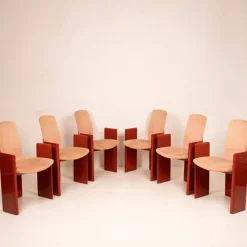
The Kinu chairs represent a masterful blend of the sobriety of Japanese minimalism and the elegance of Italian craftsmanship, fully expressing the design philosophy of Motomi Kawakami, a designer trained in Japan and active in Milan. In the 1980s, he collaborated with leading Italian companies, bringing a minimalist, rigorous, and poetic vision.
Arflex, a pioneer in experimenting with innovative materials and avant-garde forms, found in Kawakami a partner capable of translating rationalist language into a warm, welcoming, and functional design, perfectly in tune with the spirit of the decade.
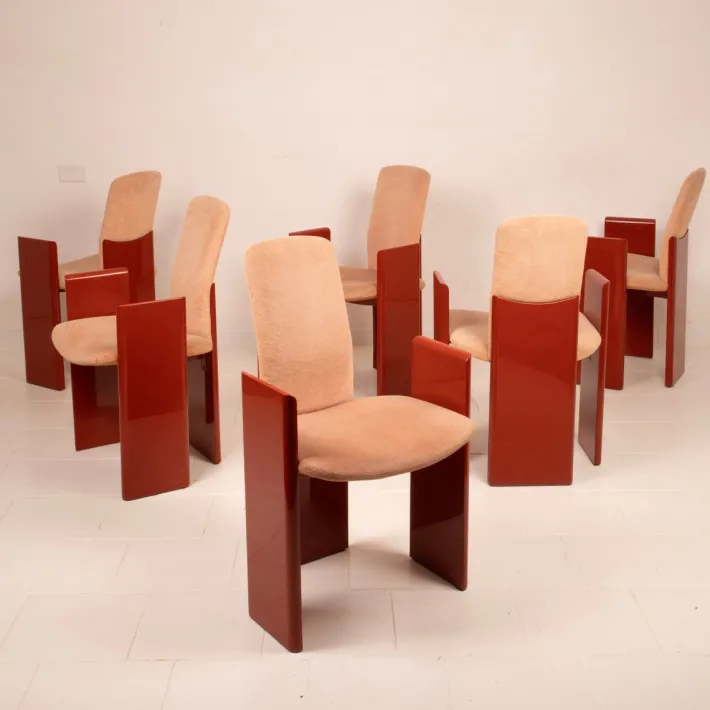
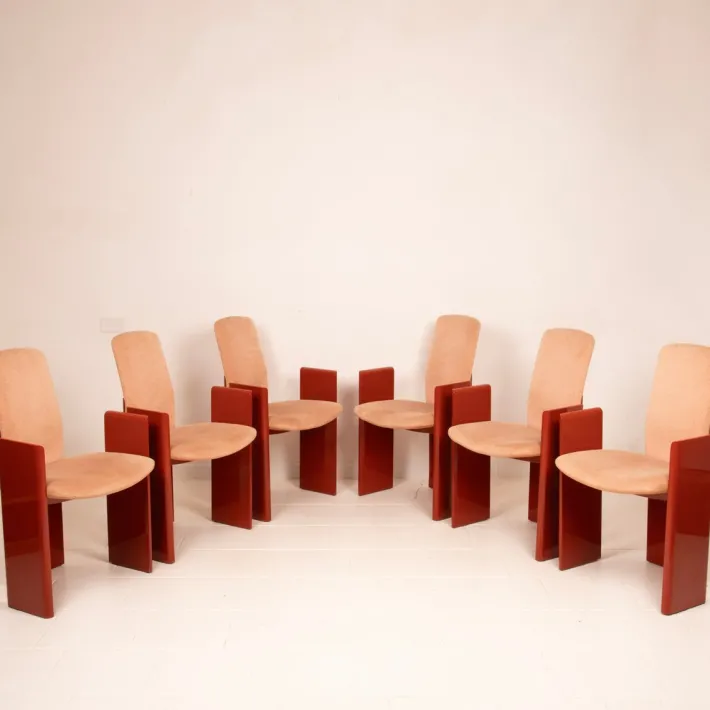
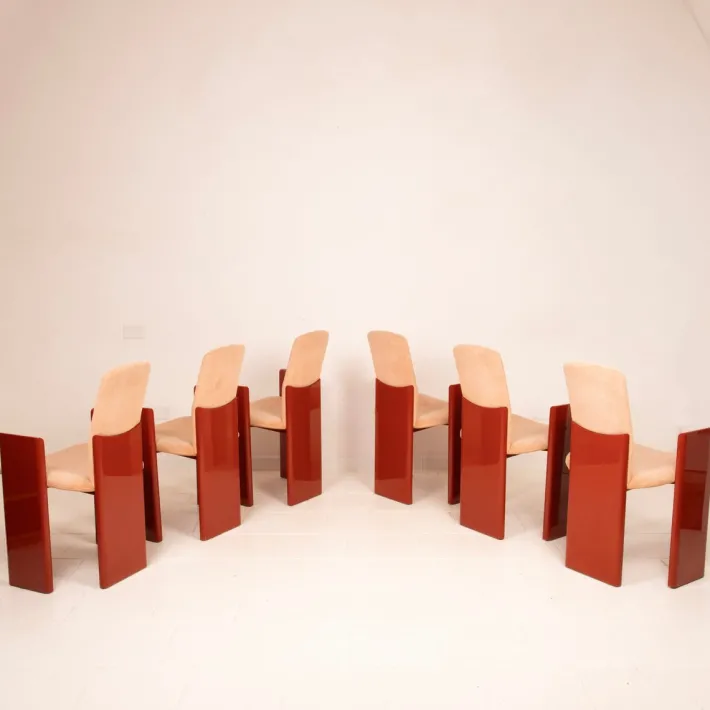
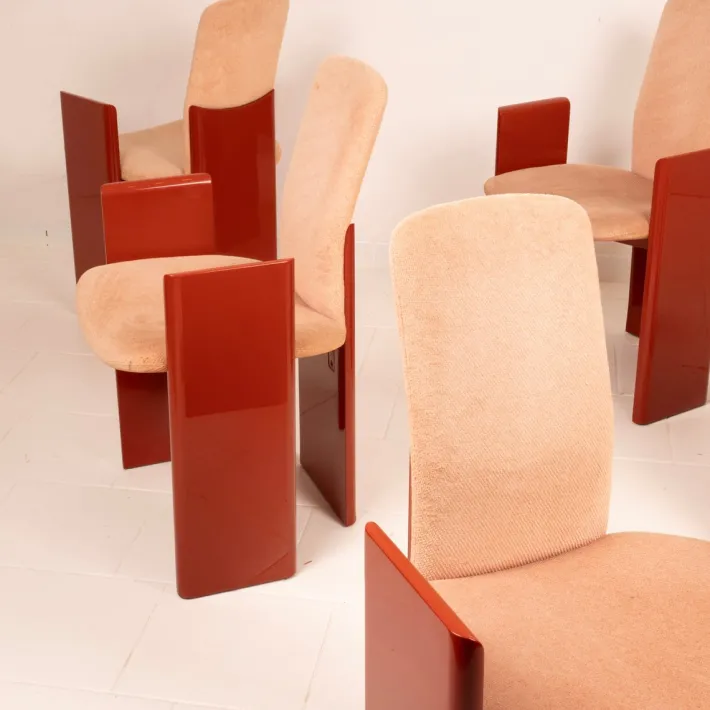
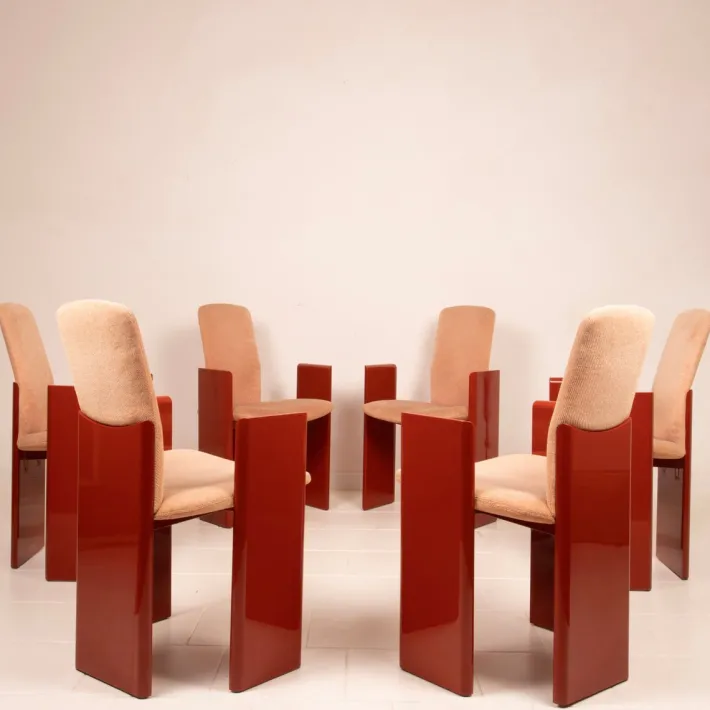
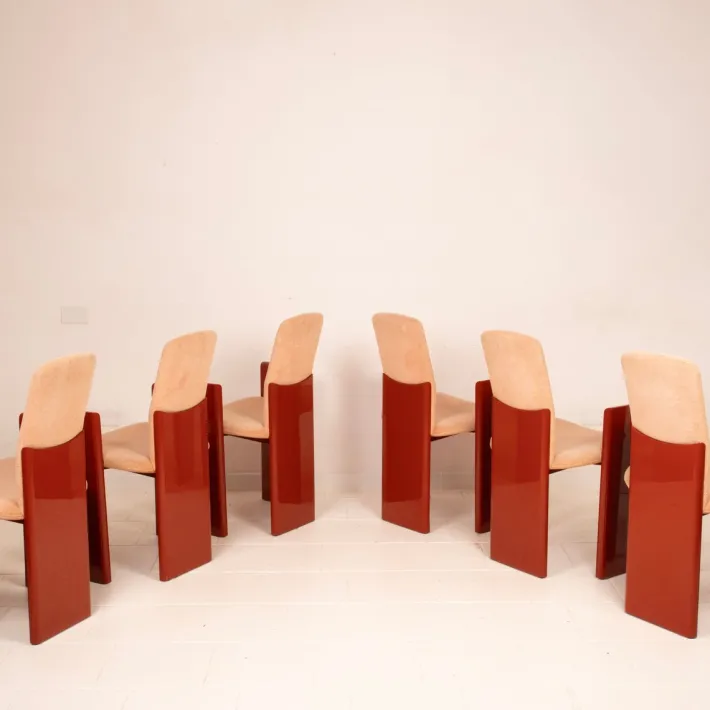
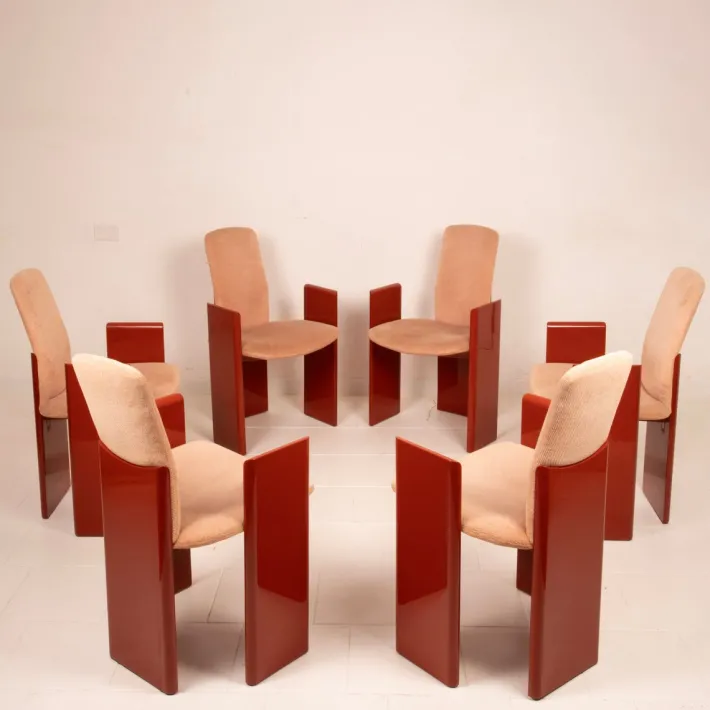
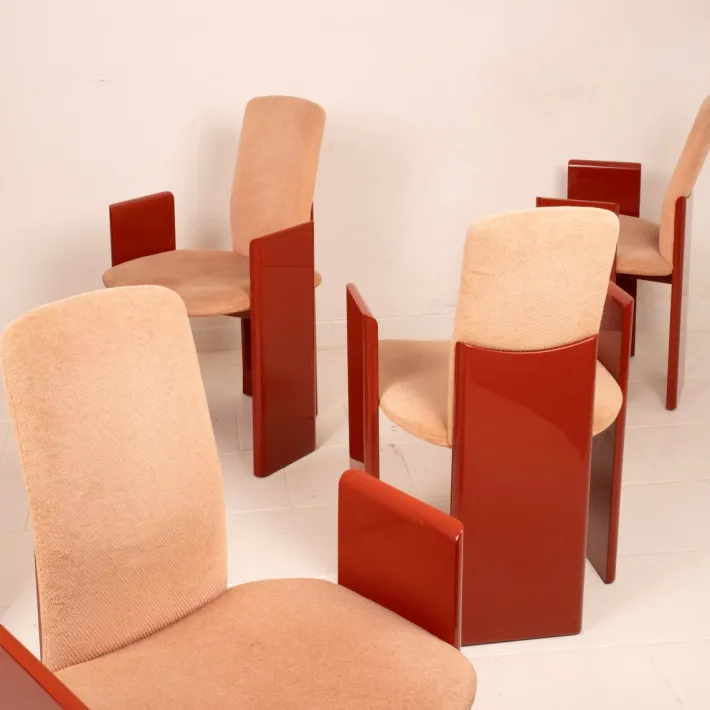
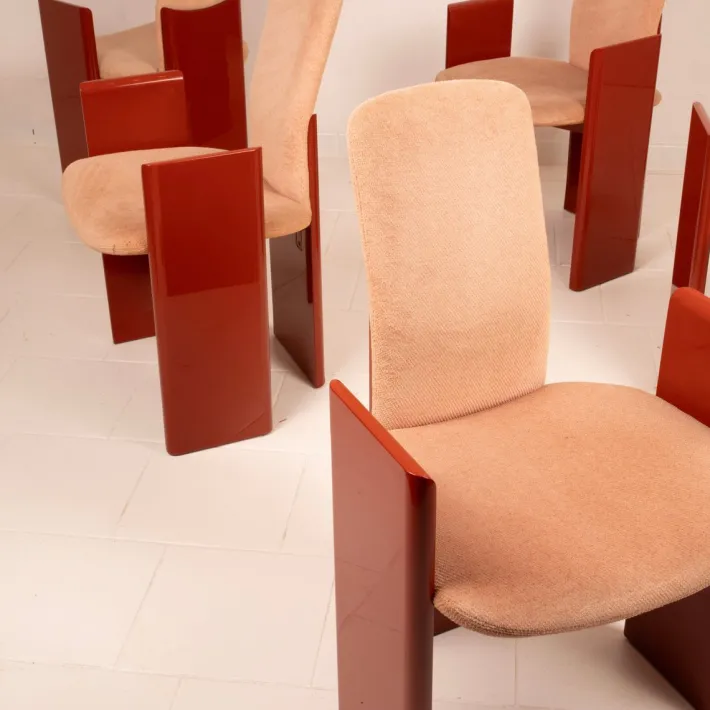
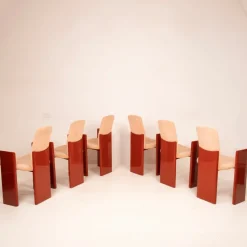
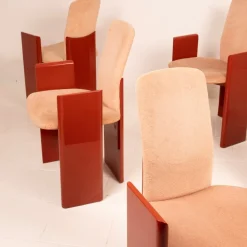
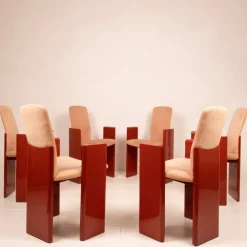
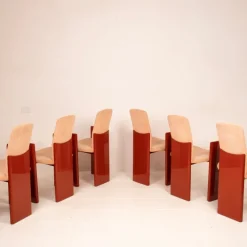
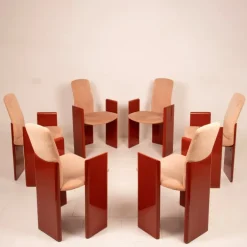
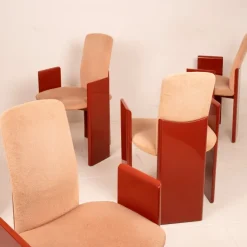
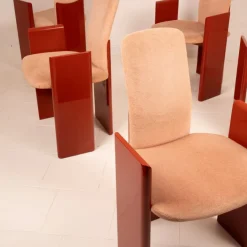
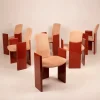
The chair frames, crafted from wood and finished with a bright red lacquer, lend the chairs a visually striking architectural feel.
The lines are clean, geometric, yet never cold: the horizontal armrests fit precisely into the overall design, accentuating the sculptural character of the model. This intense red is not just a chromatic detail; it becomes an integral part of their aesthetic identity, a bold and sophisticated color that recalls both Italian modernism and the Eastern tradition of saturated and symbolic tones.
The seat and backrest are upholstered in salmon-colored velvet, a bold and refined color choice that delicately balances the strength of the lacquered red.
The softness of the fabric interacts with the hardness of the wooden structure, creating a sensorial and tactile balance that reflects Kawakami’s attention to ergonomics and comfort. The result is a harmonious whole, capable of combining formal rigor and ease of use, making these chairs ideal for both everyday use and a collector’s item.
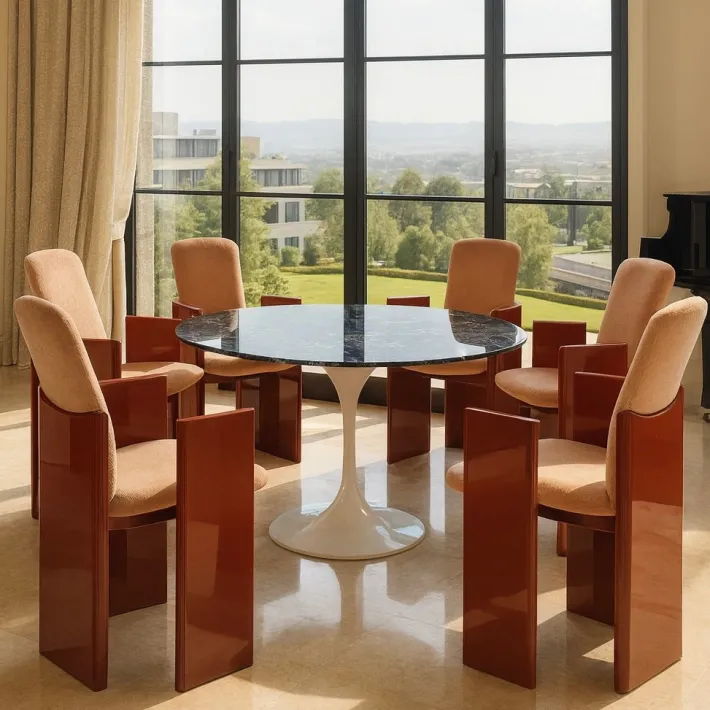
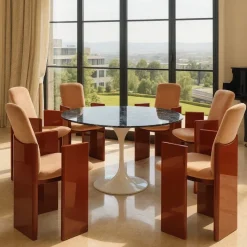
The Kinu chairs stand out for their versatility: originally designed as dining chairs, their timeless design allows them to now fit into a variety of settings—from a contemporary dining room to an eclectic living space, even professional settings and galleries.
Their strength lies precisely in their ability to combine aesthetics and function, responding to the need for design that is not only to be admired, but also to be experienced.
from a historical perspective, the 1980s represented a period of openness for Arflex towards new languages and international collaborations.
Motomi Kawakami, with the Kinu model, created a product that reflects that moment of creative ferment, anticipating subsequent trends linked to the cross-cultural contamination and the search for a universal design language.
Today, these chairs are not only witnesses of that era, but true collector’s items, sought after by enthusiasts and collectors of 20th-century design.
The six chairs presented are in excellent vintage condition, with minimal signs of aging consistent with their age. These do not compromise either the aesthetics or the structure, but rather underscore the authenticity and history of the piece.
The lacquer still maintains its brilliance, while the velvet retains its chromatic elegance intact.
These Kinu chairs by Motomi Kawakami for Arflex, from 1983, are not just a set of chairs, but a manifesto of the perfect fusion of Japanese rigor and Italian sensibility. A unique opportunity to enhance prestigious spaces with an authentic, refined piece imbued with historical and aesthetic significance.
Product Name: Kinu Chairs by Motomi Kawakami for Arflex, 1983
Designer: Motomi Kawakami
Year of Design: 1983
Style: Japanese Minimalism and 1980s Italian Modernism
Primary Materials: Wooden frame with glossy red lacquer, seat and back upholstered in salmon-colored velvet
Distinctive Design: Architectural structure with sculptural horizontal armrests, deep red lacquer, and salmon-colored velvet that balances strength and softness
Dimensions: Height: 86cm | Width: 54cm | Depth: 48cm
Comfort: Ergonomic and enveloping seat, combining the rigor of the wooden structure with the tactile softness of velvet
Typical Use: Dining chairs for refined interiors, also ideal for contemporary settings, eclectic spaces, professional settings, and design collections
Design Icon: A rare example representative of Arflex’s experimental spirit in the 1980s, reflecting Kawakami’s fusion of Japanese discipline and Italian sensibility
Versatility: Conceived as dining chairs, they adapt perfectly to a variety of contexts—residential, professional, or curatorial
Current Design Condition: Excellent vintage condition with minimal signs of aging consistent with the era; the lacquer retains its brilliance and the velvet maintains its chromatic elegance.
Additional Notes: Please note that this item is in excellent vintage condition. Minor signs of aging may be present, which do not affect its functionality. We encourage you to consider these characteristics before purchasing.
The seller assumes all responsibility for this listing.
About This Piece
Vintage Design
The Kinu chairs represent a masterful blend of the sobriety of Japanese minimalism and the elegance of Italian craftsmanship, fully expressing the design philosophy of Motomi Kawakami, a designer trained in Japan and active in Milan. In the 1980s, he collaborated with leading Italian companies, bringing a minimalist, rigorous, and poetic vision.
Arflex, a pioneer in experimenting with innovative materials and avant-garde forms, found in Kawakami a partner capable of translating rationalist language into a warm, welcoming, and functional design, perfectly in tune with the spirit of the decade.
The chair frames, crafted from wood and finished with a bright red lacquer, lend the chairs a visually striking architectural feel.
The lines are clean, geometric, yet never cold: the horizontal armrests fit precisely into the overall design, accentuating the sculptural character of the model. This intense red is not just a chromatic detail; it becomes an integral part of their aesthetic identity, a bold and sophisticated color that recalls both Italian modernism and the Eastern tradition of saturated and symbolic tones.
The seat and backrest are upholstered in salmon-colored velvet, a bold and refined color choice that delicately balances the strength of the lacquered red.
The softness of the fabric interacts with the hardness of the wooden structure, creating a sensorial and tactile balance that reflects Kawakami’s attention to ergonomics and comfort. The result is a harmonious whole, capable of combining formal rigor and ease of use, making these chairs ideal for both everyday use and a collector’s item.
The Kinu chairs stand out for their versatility: originally designed as dining chairs, their timeless design allows them to now fit into a variety of settings—from a contemporary dining room to an eclectic living space, even professional settings and galleries.
Their strength lies precisely in their ability to combine aesthetics and function, responding to the need for design that is not only to be admired, but also to be experienced.
from a historical perspective, the 1980s represented a period of openness for Arflex towards new languages and international collaborations.
Motomi Kawakami, with the Kinu model, created a product that reflects that moment of creative ferment, anticipating subsequent trends linked to the cross-cultural contamination and the search for a universal design language.
Today, these chairs are not only witnesses of that era, but true collector’s items, sought after by enthusiasts and collectors of 20th-century design.
The six chairs presented are in excellent vintage condition, with minimal signs of aging consistent with their age. These do not compromise either the aesthetics or the structure, but rather underscore the authenticity and history of the piece.
The lacquer still maintains its brilliance, while the velvet retains its chromatic elegance intact.
These Kinu chairs by Motomi Kawakami for Arflex, from 1983, are not just a set of chairs, but a manifesto of the perfect fusion of Japanese rigor and Italian sensibility. A unique opportunity to enhance prestigious spaces with an authentic, refined piece imbued with historical and aesthetic significance.
Product Name: Kinu Chairs by Motomi Kawakami for Arflex, 1983
Designer: Motomi Kawakami
Year of Design: 1983
Style: Japanese Minimalism and 1980s Italian Modernism
Primary Materials: Wooden frame with glossy red lacquer, seat and back upholstered in salmon-colored velvet
Distinctive Design: Architectural structure with sculptural horizontal armrests, deep red lacquer, and salmon-colored velvet that balances strength and softness
Dimensions: Height: 86cm | Width: 54cm | Depth: 48cm
Comfort: Ergonomic and enveloping seat, combining the rigor of the wooden structure with the tactile softness of velvet
Typical Use: Dining chairs for refined interiors, also ideal for contemporary settings, eclectic spaces, professional settings, and design collections
Design Icon: A rare example representative of Arflex’s experimental spirit in the 1980s, reflecting Kawakami’s fusion of Japanese discipline and Italian sensibility
Versatility: Conceived as dining chairs, they adapt perfectly to a variety of contexts—residential, professional, or curatorial
Current Design Condition: Excellent vintage condition with minimal signs of aging consistent with the era; the lacquer retains its brilliance and the velvet maintains its chromatic elegance.
Additional Notes: Please note that this item is in excellent vintage condition. Minor signs of aging may be present, which do not affect its functionality. We encourage you to consider these characteristics before purchasing.
Click here for full descriptionClose description
| Creator | Motomi Kawakami |
|---|---|
| Manufacturer | Arflex |
| Design Period | 1980 to 1989 |
| Production Period | 1980 to 1989 |
| Country of Manufacture | Italy |
| Identifying Marks | This piece has been attributed based on archival documentation, such as vintage catalogs, designer records, or other literature sources |
| Style | Vintage |
| Detailed Condition | Good — This vintage/antique item may have some wear such as scratches and other signs of ageing. |
| Restoration and Damage Details | Light wear consistent with age and use |
| Product Code | BAD-2348271 |
| Materials | Wood, Velvet |
| Color | Salmon, brown |
| Width | 54 cm 21.3 inch |
| Depth | 48 cm 18.9 inch |
| Height | 86 cm 33.9 inch |
| Weight Range | Standard — Between 40kg and 80kg |
Be the first to review “Pamono Chairs by Kinu di Motomi Kawakami for Arflex 1983, Set of 6 Outlet”
Related products
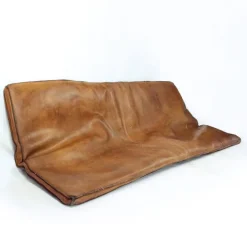
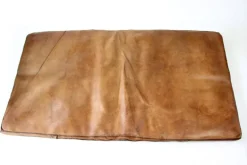
Daybeds & Chaises Lounges
Pamono Vintage Leather Gym Mat, Former Czechoslovakia, 1930s Online
Daybeds & Chaises Lounges
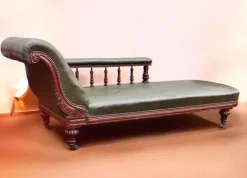
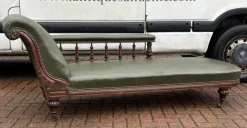
Pamono Antique Victorian Oak Chaise Longue in Green Leather with Brass Castors Hot
Daybeds & Chaises Lounges
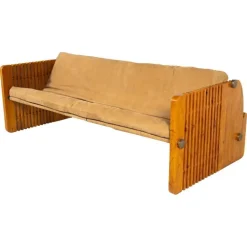
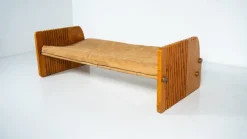
Pamono Vintage Italian Daybed by Marzio Cecchi, 1970s Online


Children's Chairs

Lounge Chairs & Armchairs
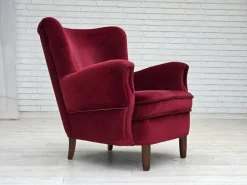
Pamono Danish Armchair in Cherry-Red Velour with Beech Legs, 1960s New


Daybeds & Chaises Lounges
Beds & Bedroom Sets
Children's Chairs
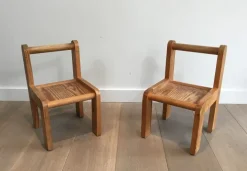
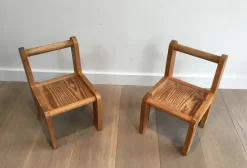
Pamono Set of Children’s Chairs by Svend Langkilde, 1970s Outlet
Couches & Sofas
Lounge Chairs & Armchairs
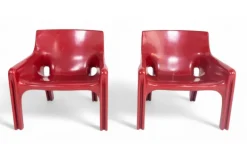
Pamono Vicario Armchairs by Vico Magistretti for Artemide, 1970s Best
Beds & Bedroom Sets
Login
Reviews
There are no reviews yet.